Projects
Selected course projects from UC San Diego. Code for course assignments is available on request.

Real-Time GPU Particle Physics Simulation
Fall 2025CSE 167 · Computer Graphics · Individual project
A 2D physics engine that runs entirely inside a fragment shader. Shaders keep no state between frames, so each pixel of a feedback buffer stores one particle's position and velocity, letting the simulation carry state from frame to frame.
- Penalty-method collisions against walls and other particles
- Gravity and linear damping, integrated with semi-implicit Euler
- Click to spawn new particles in real time
Also on Shadertoy.
Rating Prediction for Book Recommendation
Fall 2024CSE 158R · Recommender Systems & Web Mining
🏆 Ranked 3rd of 710 students
Predicted how users would rate books from a large interaction dataset, scored on a class-wide leaderboard.
- SVD collaborative filtering, tuned by grid search over latent factors, learning rate, regularization, and epochs
- Separate read-prediction model: a Random Forest trained on balanced positive/negative samples with popularity features
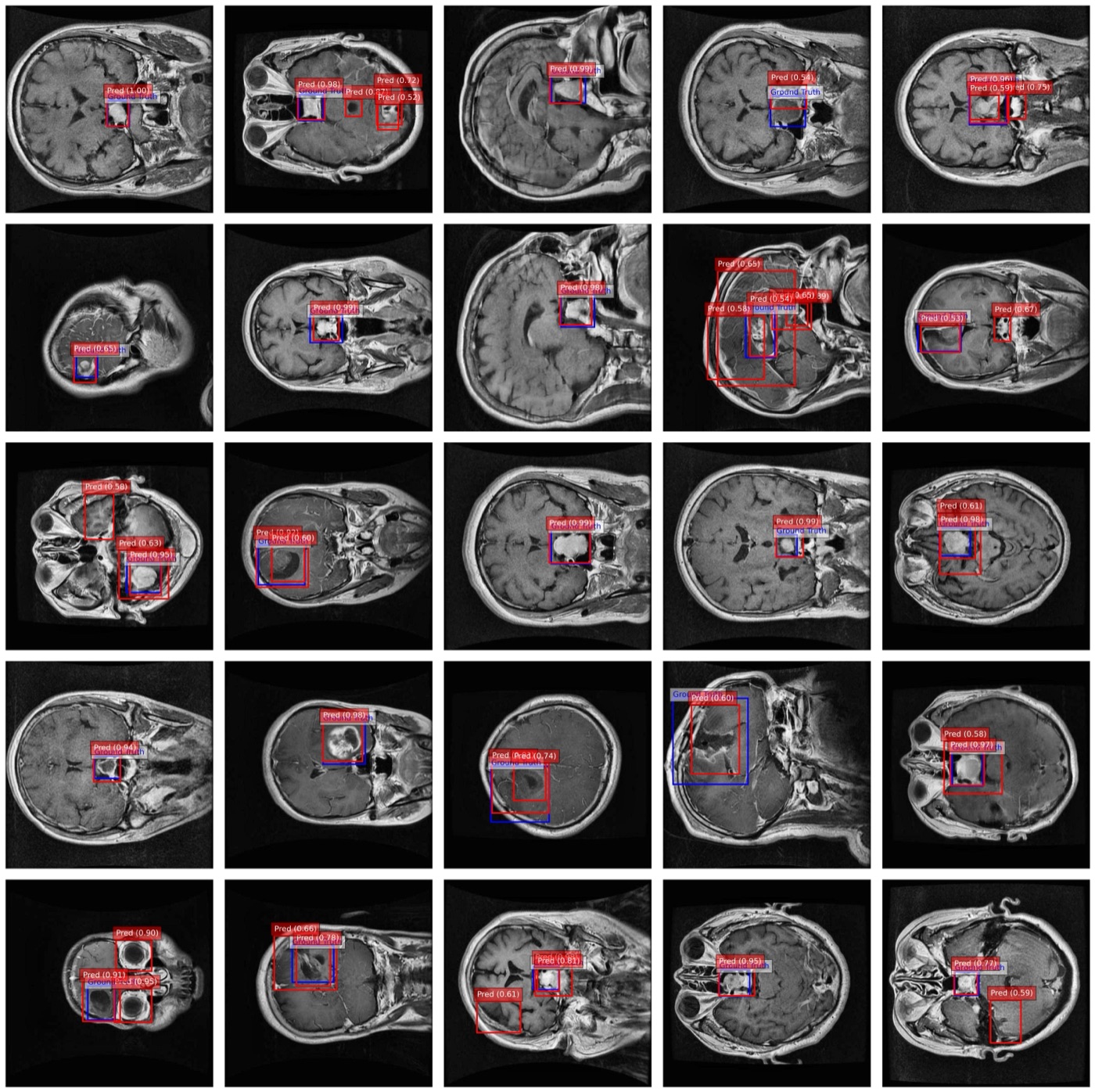
Brain Tumor Detection from MRI
Winter 2025ECE 176 · Deep Learning · with Virakboth Hang
Test accuracy 81.9% → 94.0%
Detected and localized brain tumors in MRI scans, moving step by step from a linear baseline to deep detection models.
- Classification: logistic regression (81.9%) → fully connected network → ResNet-10 with batch normalization (94.0%)
- Localization: fine-tuned Faster R-CNN (ResNet-50 + FPN) to draw bounding boxes around tumors (red = predicted, blue = ground truth)
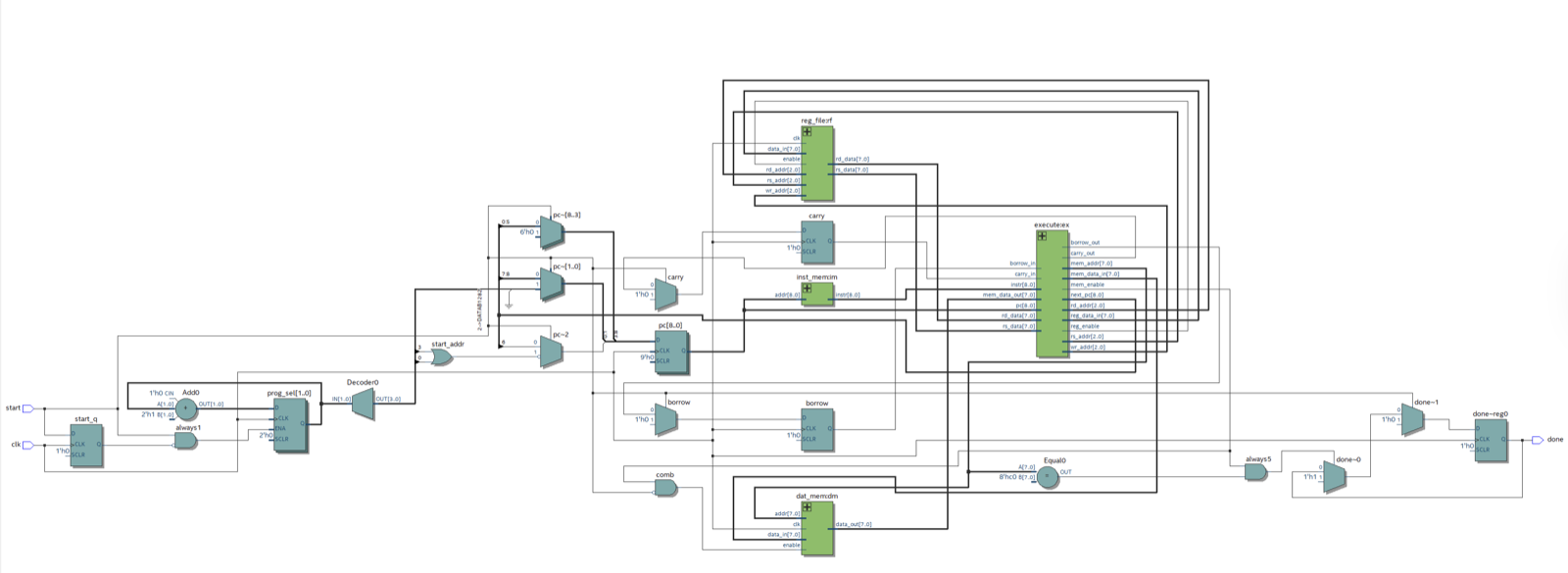
Custom 9-bit ISA CPU
Spring 2026CSE 141L · Computer Architecture · Team project
All 10/10 test cases passed
Designed an instruction set and processor under tight constraints: 9-bit instructions, 8-bit registers, and only 512 instruction slots.
- 14-opcode ISA, a SystemVerilog CPU, and a Python assembler
- Ran 16-bit Hamming-distance and 32-bit multiplication programs on the 8-bit datapath